Service

Your business needs a brain.

For owners ready to hand whole workflows to AI. One central memory, connected to every system you run, shared by staff and agents, with a person signing off.

The business brain

“We need content. Constantly.” So someone opens a chat window, pastes in the same background about the business again, and gets back something that sounds like nobody in particular. That isn’t an AI problem. It’s a memory problem.

A business brain is one central, AI-readable memory of how your business works: what you sell, what you charge, how you talk, who your customers are and what you promised them. It’s connected to your CRM, website, inbox, calendar, social channels and finance, so it stays current without anyone retyping it. Call it an AI knowledge base for business, with one difference: this one does things.

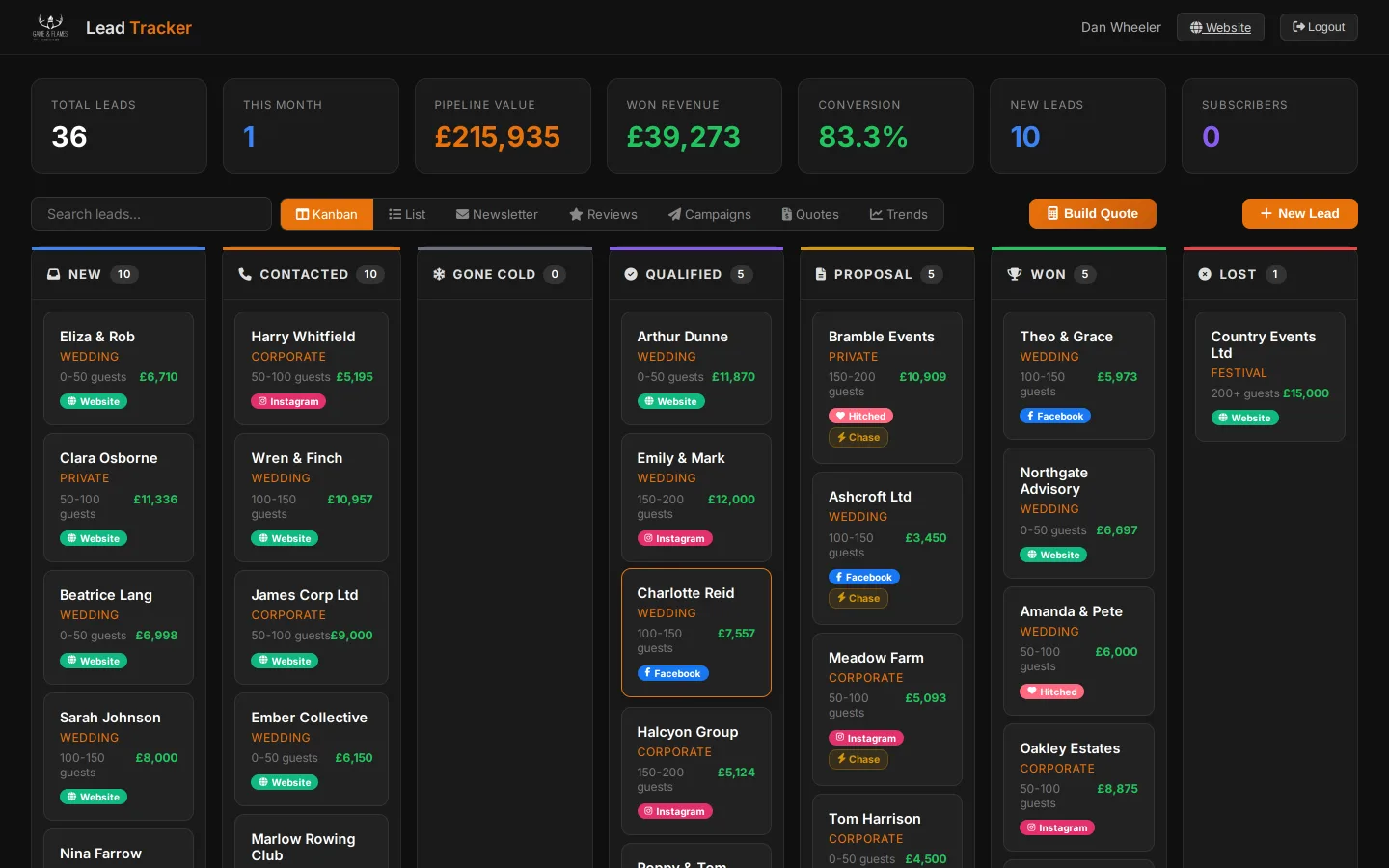
Your staff and your AI agents both read from it and write to it. A salesperson checks a customer’s history before a call; an agent drafts the quote from the same record and logs it once it’s sent. A person signs off before anything reaches a customer.

Without a brain, AI stays a set of clever chat windows that know nothing about you. With one, you can hand whole workflows to agents, with a human signing off. It’s the reason we exist, and everything else we build - websites, apps, automations, training - is a door into it.


What we build

What we build

The memory

We write down how your business actually works, in a form both people and AI can read: services and prices, policies, tone of voice, the questions customers ask, how you handle a complaint, what a good job looks like. Most of it already lives in your head and your inbox. We get it out, keep it in one place and give each part an owner, so it’s built for agents to use, not just for people to search.

The connections

MCP servers - your tools, wired into the AI - connect the memory to the systems you already run: the CRM, the website, the inbox, the calendar, the social channels and the finance system. Each connection gets the access its job needs and nothing more. When a booking moves or an invoice is paid, the brain knows, so the next answer comes from today’s facts, not last month’s spreadsheet.

The agents

Agents read from the brain and write back to it. One answers enquiries using your real prices and diary, one drafts quotes, one chases, one logs what happened against the customer. Because they share one memory, they work from the same facts, and your staff see the same record the agents do. It’s the murmuration over Eastbourne Pier, done in software: thousands of small tasks, one intelligence.

The sign-off desk

Everything an agent wants to send, change or spend lands in one queue, where a person approves it, edits it or bins it. You decide which jobs need a sign-off, and nothing that touches a customer goes out without one unless you’ve said so in writing. Agents can work through the night; the queue is waiting for you in the morning. Routine jobs can earn their independence over time; the important ones keep a human on the last mile.

The habits

A brain nobody updates goes stale, so the last piece is people. We train your team to check it before a call, add to it after one, and correct it when an agent gets something wrong. When someone fixes an answer, the fix goes into the brain and every agent uses it from then on. That’s how the memory gets sharper with use instead of drifting out of date.

How it works with us

How it works with us

01

The review call

Twenty to thirty minutes. We find where time and money leak, and which fix pays for itself first.

02

A fixed-price proposal

One scope, one price, one date, with the value case written next to the price. No hourly meter running.

03

Built in weeks

You see progress every week on a working link, not a slide. You can change your mind while it is cheap.

04

Handover, or we run it

You own the code, the data and the accounts. Run it yourselves, or we run it for you.

The front line

What we actually use

A business brain needs the newest tooling, because the older kind can’t do it. Agents do the work rather than chat about it. MCP servers give those agents a standard way into your CRM, inbox and calendar, instead of a fragile one-off connection for every tool. Agent swarms let many agents split one big job and finish it in parallel. Model-native automation means the AI can read an email, decide what it is and file it in the right place, without a rule written for every case. We use all of it in production, and when it changes, we change that week. You don’t need to follow any of it. That’s our job.

Questions people ask

Questions people ask

Isn’t this just ChatGPT with our documents uploaded?

No. Uploading documents to a chat window gives you a clever reader with no hands: it can answer questions about last year’s price list, but it can’t see today’s bookings or do anything about them. A business brain is connected to your systems, kept current, shared by staff and agents, and everything it drafts has a person signing off.

Where does our data live, and who owns it?

In your accounts, under your name. You own the code and the data, and we hand over the repository and the keys. We build on Cloudflare where we can, so hosting stays near zero, and we avoid locking you into anyone’s subscription, ours included.

We’re a small business. Isn’t this for corporates?

Small is where it pays first. In a small business the memory usually lives in the owner’s head and a few inboxes, which is exactly what breaks when the owner takes a holiday. Fewer systems also means fewer connections to build, so the brain is useful sooner.

Where do we start?

Not with the brain. On the free review call we find the job that pays first, such as answering leads or building quotes, and build that. Then we connect the next system, and the next. Each step works on its own, so you’re never paying for a plan, and the brain grows out of real work instead of a 200-page deck.

What does a business brain cost?

It’s priced one stage at a time, each at a fixed price, because no two businesses run the same systems. Every stage comes with its own value case - hours saved, leads answered, revenue traced - so you can decide whether the next one is worth it before you commit.

Working in Sussex? See AI consultant in Sussex, or the towns we cover in the footer.

Free business review

Tell us what’s slow. We’ll tell you what to fix first.

A call of 20 to 30 minutes. We find the gaps, the leaks and the quick wins, and what each one is worth to you. Fixed price after that, no hourly rates. No 200-page deck.

Or tell us what you want to achieve and Dan will come back to you within one working day. Email dan@danielnicholls.com.