Lead follow-up agent
Every enquiry gets a drafted reply while it’s still warm, including the ones that arrive while you’re asleep. The agent reads the message, works out what the customer wants, writes an answer in your voice and puts it in front of you to approve. Then it follows up on a schedule you set until the lead books or says no, and an opt-out stops it for good. Every touch is logged against the lead, so the history lives in the system, not in one person’s head.
Call notes that draft the follow-up
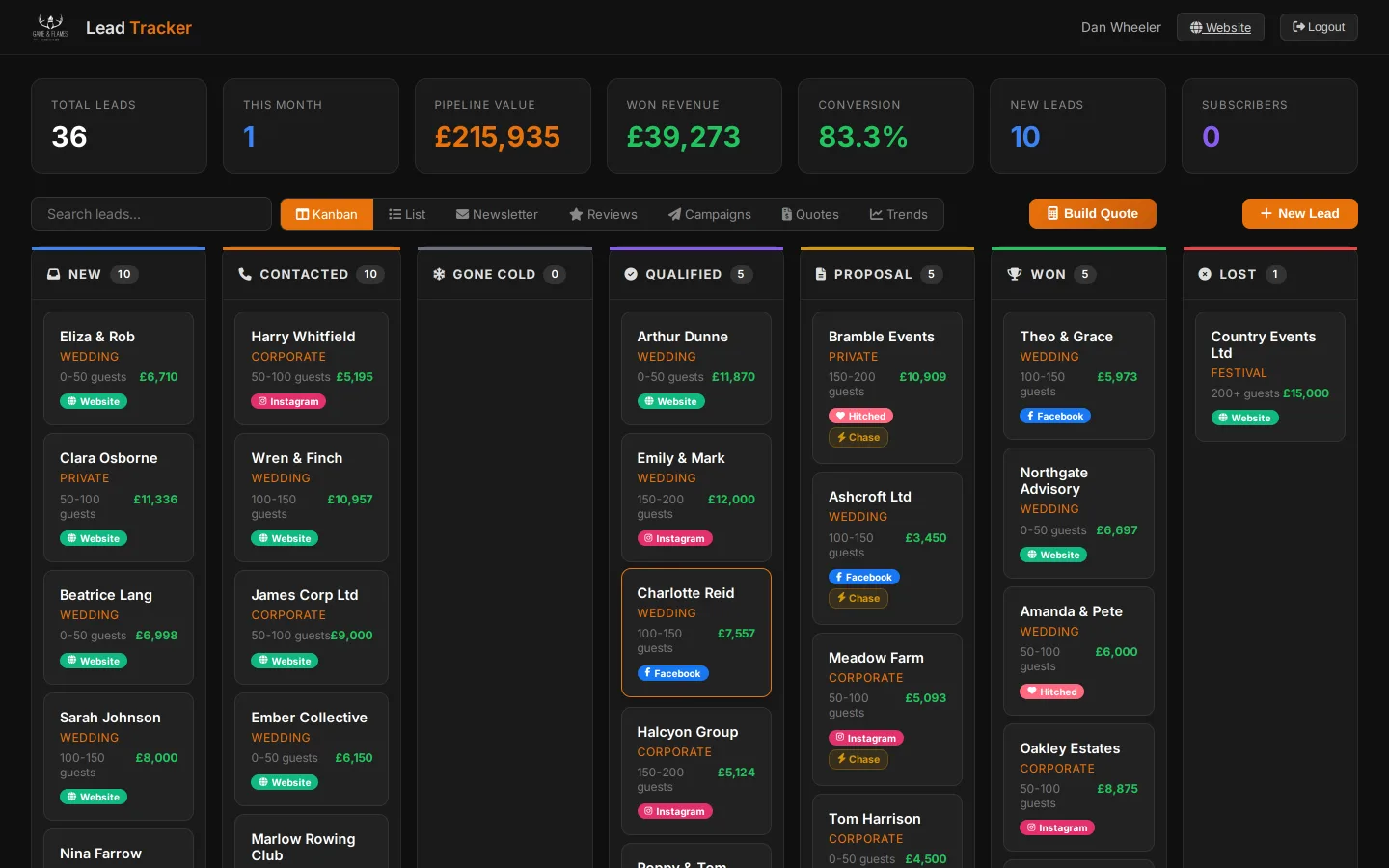
Talk to the customer and let the agent take the notes. For Game and Flames, an award-winning live-fire caterer in Bexhill, we built in-browser call recording with AI transcription and diarisation - working out who said what - which drafts the follow-up email from the conversation. The owner reads the draft, corrects anything the AI misheard and sends it, so the call ends with the follow-up already written. It suits any business that sells on the phone: trades, hospitality, fitness, professional services.
Quote-and-chase agent
Before we worked together, quoting at Game and Flames meant an evening with a spreadsheet. We built a four-step quote builder on the owner’s own pricing rules, with versions and a branded print view. A quote agent takes the next step: it fills in the builder from the enquiry, flags anything unusual and drafts the covering email. You check the numbers and send it, and the agent chases until the customer says yes, no or not yet.
Drafting agents for plans and documents
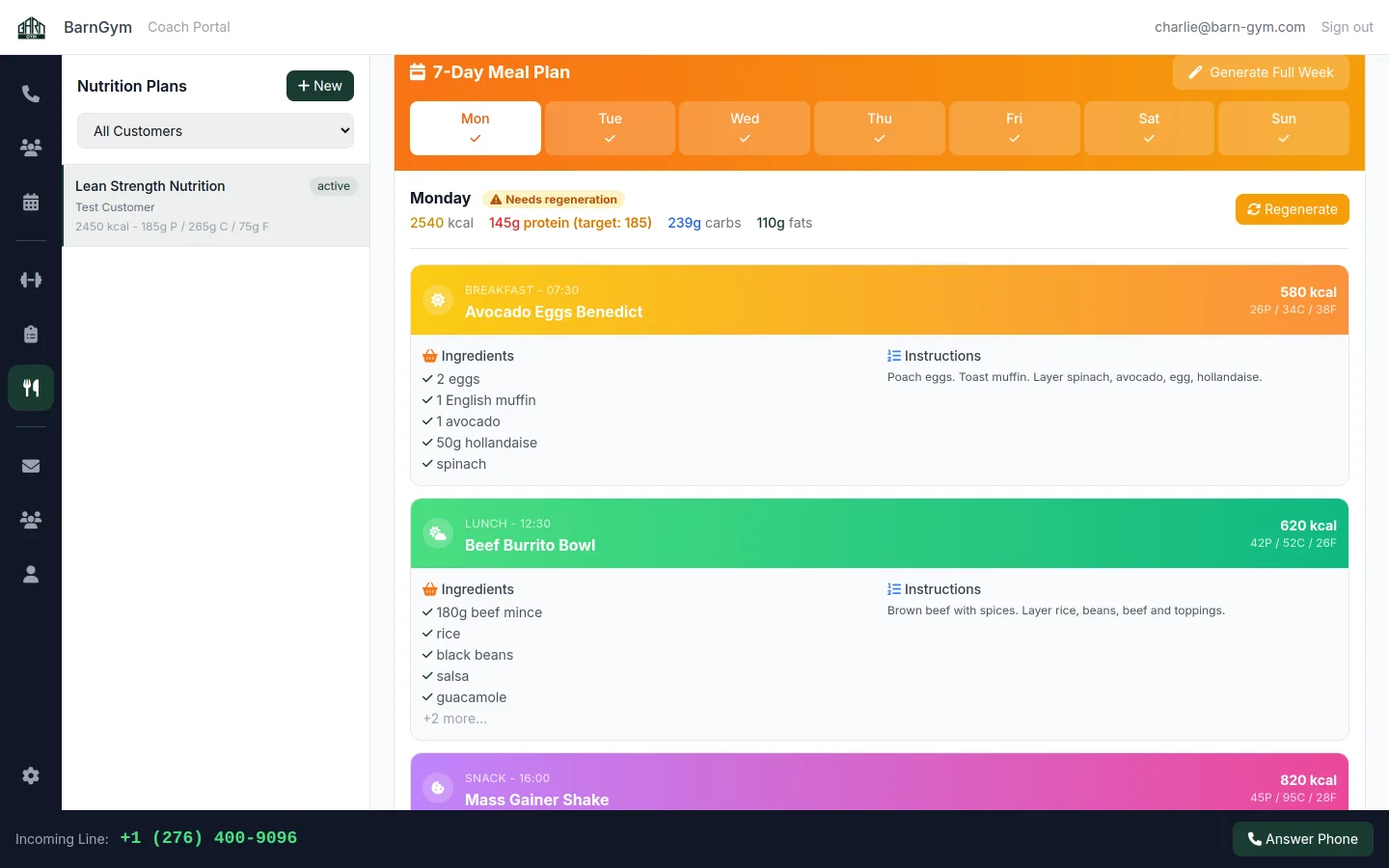
Some documents get written again and again with small changes: the training plan, the proposal, the monthly report, the method statement. A drafting agent writes the first version from your own rules and records, and a person edits it and signs it off. In Barn Gym’s coach portal, AI writes a full week of meals in seconds, and the coach reviews the draft and adjusts it before it becomes anyone’s plan.
Agent swarms for the big jobs
Some jobs are too big for one agent: a back catalogue of product descriptions, a year of enquiries to sort and tag, a pile of supplier invoices to match against payments. A swarm splits the job across many agents working at once, each on its own slice, and brings the results back together. A person checks samples as the work comes in and signs off the batch before any of it is used. Big jobs stop waiting for a quiet month.