Problem 02
“Our marketing takes forever.”
Every week a brochure, deck or product shot sits in drafts is a week your buyers decide without it.
What it actually costs
What it is costing you
Why it happens
Why it happens
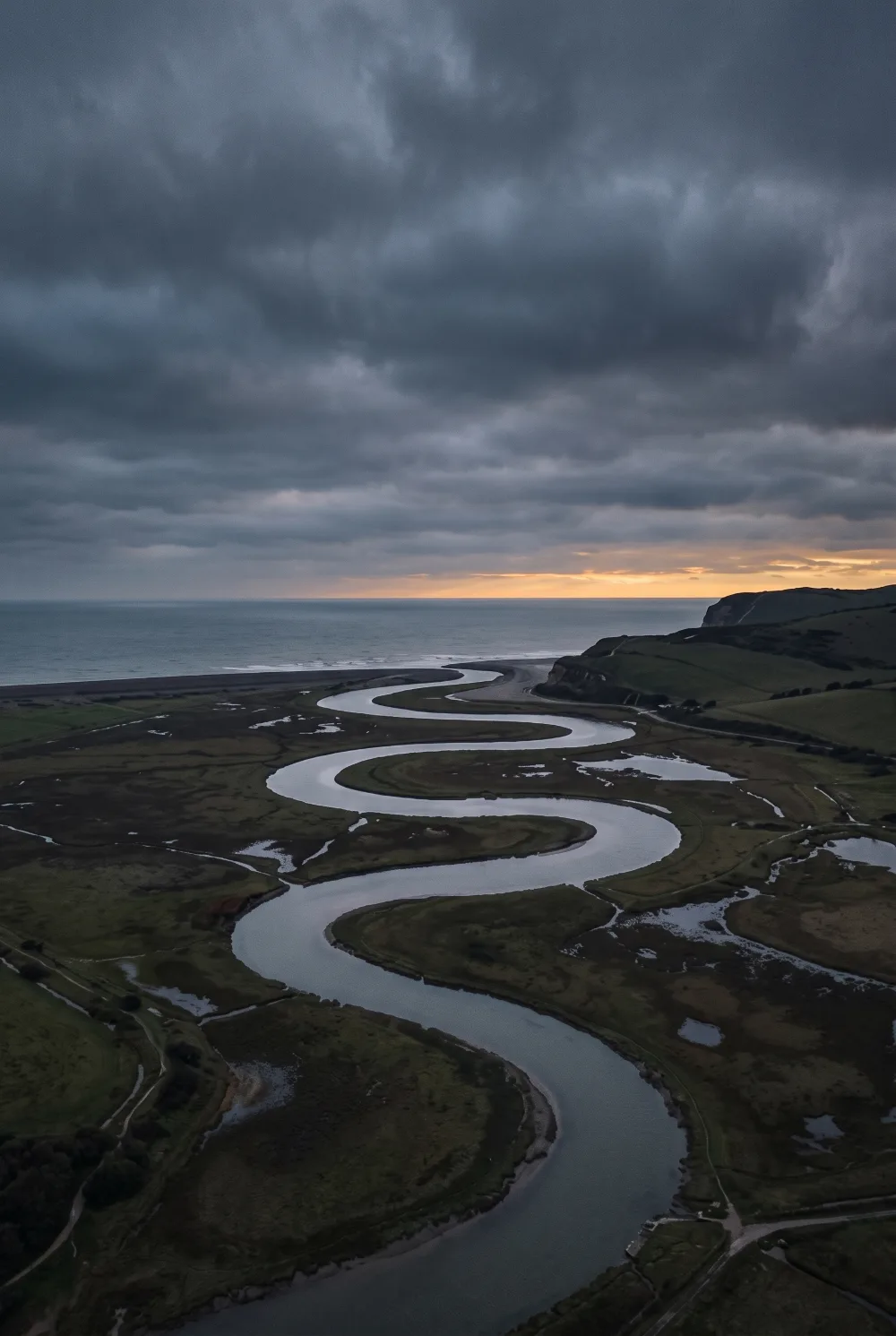
Collateral meanders like the Cuckmere. A brief goes to a designer, a draft comes back, everyone adds comments, the photographer can’t come until next month and the printer wants final files by Friday. Each step makes sense on its own. Together they turn a two-page brochure into a project measured in weeks, and by the time it’s printed, the offer on the back has changed.
Not a lack of talent. A queue. Every piece waits for the one person with the skills, the files and the brand in their head, and that person is also doing everything else, from the website to the newsletter. Volume makes it worse: a new range needs photographs of every product, one campaign needs the same message in every size each platform wants, and every version needs checking. None of it is difficult. Most of it is waiting, and the queue stops altogether when that one person goes on holiday.
Meanwhile buyers don’t wait. In the study above, business buyers were nearly 60% of the way through a decision before they spoke to a supplier, working from whatever they could find: your website, your deck, your product pages, the post a colleague forwarded. On a product page, most shoppers start with the pictures. A sales team without the right deck makes its own, and the brand drifts a little further with every copy. If the material is late or off-brand, it sells for somebody else.
How we fix it
How we fix it
- 01
We turn your brand into a kit the AI follows.
Colours, type, tone of voice, product facts and approved claims live in one place the AI reads before it writes or designs anything, so every draft starts on brand and the rounds of corrections shrink.
- 02
AI agents draft the collateral, at volume.
Brochure copy, sales decks, ads in every size, product descriptions and product imagery arrive as first drafts, which is how Hawaiian T-Shirts launched on schedule with 1,047 product images delivered in 7 days.
- 03
A person signs off every piece before it goes anywhere.
Each draft is checked on our side and approved on yours before it’s published, printed or sent, because AI makes the volume possible and people keep it accurate and on message.
- 04
The jobs you repeat become templates your team can edit.
Proposals, menus, price lists, event posters and social graphics stop being projects, so the tenth brochure costs a fraction of the first, in money and in waiting.
- 05
Then we train your team to run it.
You get the kit, the templates and the logins, plus someone on your team who knows how to use them, and you stop queueing for an agency, including us.
Proof
Shipped and running
Hawaiian T-Shirts · E-commerce brand
Launch images in a week, at 97% less.
1,047 AI-generated product images for an e-commerce brand, delivered in 7 days at 97% less than traditional photography. The brand launched on schedule.
1,047AI-generated product images
What it runs on
What it runs on
Questions people ask
Questions people ask
Won’t AI images look fake?
They can, which is why nothing goes out unchecked. We work from your real products and your brand kit, a person compares every image with the real thing, and anything that misrepresents the product is redone or dropped. Colours, prints and proportions get the hardest look, because a print that’s slightly wrong is a return waiting to happen. Customers should never be surprised by what arrives in the post. Hawaiian T-Shirts launched on schedule with AI-generated product images, and where a real photograph is the better choice, we’ll say so before anyone spends money on the alternative.
What can you actually produce?
Most of what a business hands to customers: brochures, sales decks, proposals, price lists, ads in every size, social graphics and email templates. For an online shop that means product shots and descriptions; for a restaurant, menus and event posters; for a trade, quote templates and leaflets. If it follows your brand and gets made more than once, it’s a good candidate, and seasonal pieces such as a summer menu or a Christmas offer are where the speed shows first. A new logo, or a campaign built on one big idea, still starts with a person and a blank page, and we’ll tell you which of your jobs are which before we quote.
Do we still need our designer?
Keep a good designer. Their job changes from producing every variation to setting the standard and approving what ships, which is a better use of their time anyway, and the brand kit means their own work starts from the same rules as the AI’s. The first drafts, the resizing and the versions move to the machine. If you don’t have a designer, we design the kit and the first batch ourselves, then train someone on your team to run it, so the work doesn’t depend on anyone’s diary.
What can’t AI do here?
Judgement. It doesn’t know that your best customer hates orange, that a claim needs your solicitor’s approval, or that last year’s offer went badly. Your brand kit carries the rules we can write down, and the person signing off covers the ones we can’t. It can’t take responsibility either, which is why a named person on your side approves every piece. Nor can it tell you whether a piece is worth making at all. We will, and we’ll say plainly when a job needs a photographer, an illustrator or a writer rather than a model, because sometimes it does.
What does it cost, and what do we keep?
We quote a fixed price after the free review, covering the brand kit, the first batch and the templates, with the value written beside it: hours saved, and photography or agency spend avoided. We build that value case from what your last brochure, campaign or shoot actually cost, in money and in weeks. If the old way is cheaper for what you make, we’ll tell you. There’s no hourly meter running while we work. Everything we make lands in your own accounts, including the instructions the AI follows, so nobody needs our permission to make the next one.
Free business review
Tell us what’s slow. We’ll tell you what to fix first.
A call of 20 to 30 minutes. We find the gaps, the leaks and the quick wins, and what each one is worth to you. Fixed price after that, no hourly rates. No 200-page deck.
Or tell us what you want to achieve and Dan will come back to you within one working day. Email dan@danielnicholls.com.