The enemy
Why most AI roadmaps are a waste of money
“We tried an agency. We got a deck.” We hear a version of that on review calls. Someone paid for an AI strategy, sat through the workshops and received a polished roadmap, with phases, a timeline and a heat map. Months later, nothing on it is running.
This is not a story about bad people. Most roadmaps are written by clever people doing exactly what they were paid to do. That is the problem.
The roadmap is the product
When the document is the deliverable, the effort goes into the document. It has to look thorough, so it grows: a maturity model, a stakeholder map, and a phase called “Foundations” that lasts a quarter.
Nobody is lying. But every hour spent making the plan look complete is an hour not spent making anything work, and the plan gets paid for whether or not anything ever does.
A roadmap also puts off the hard part. Plans are easy to agree with. The hard decisions - which job to hand to a machine first, what it is allowed to send, who checks it before it goes - only get made when you build something.
AI moves faster than the plan
A six-month plan assumes the tools will sit still for six months. They do not. The models, the prices and what is practical all change between the first workshop and the final presentation.
So a long plan bakes in the limits of the month it was written, then asks you to follow it until next year. You end up carefully delivering a strategy for tools that have already moved on.
We run the newest tooling in production: agents that do the work, and MCP servers - your tools, wired into the AI. When the tools move, we move that week. A roadmap signed off in the spring cannot.
One working system this month beats a plan for next year.
What shipping teaches you that planning cannot
One small system, running this month, gives you three things no plan can: a real number to measure, a team that has done it once, and the nerve to do the next one.
Take leads. On a roadmap, “improve lead response” is a line in Phase 2. In a business, it is a pipeline.
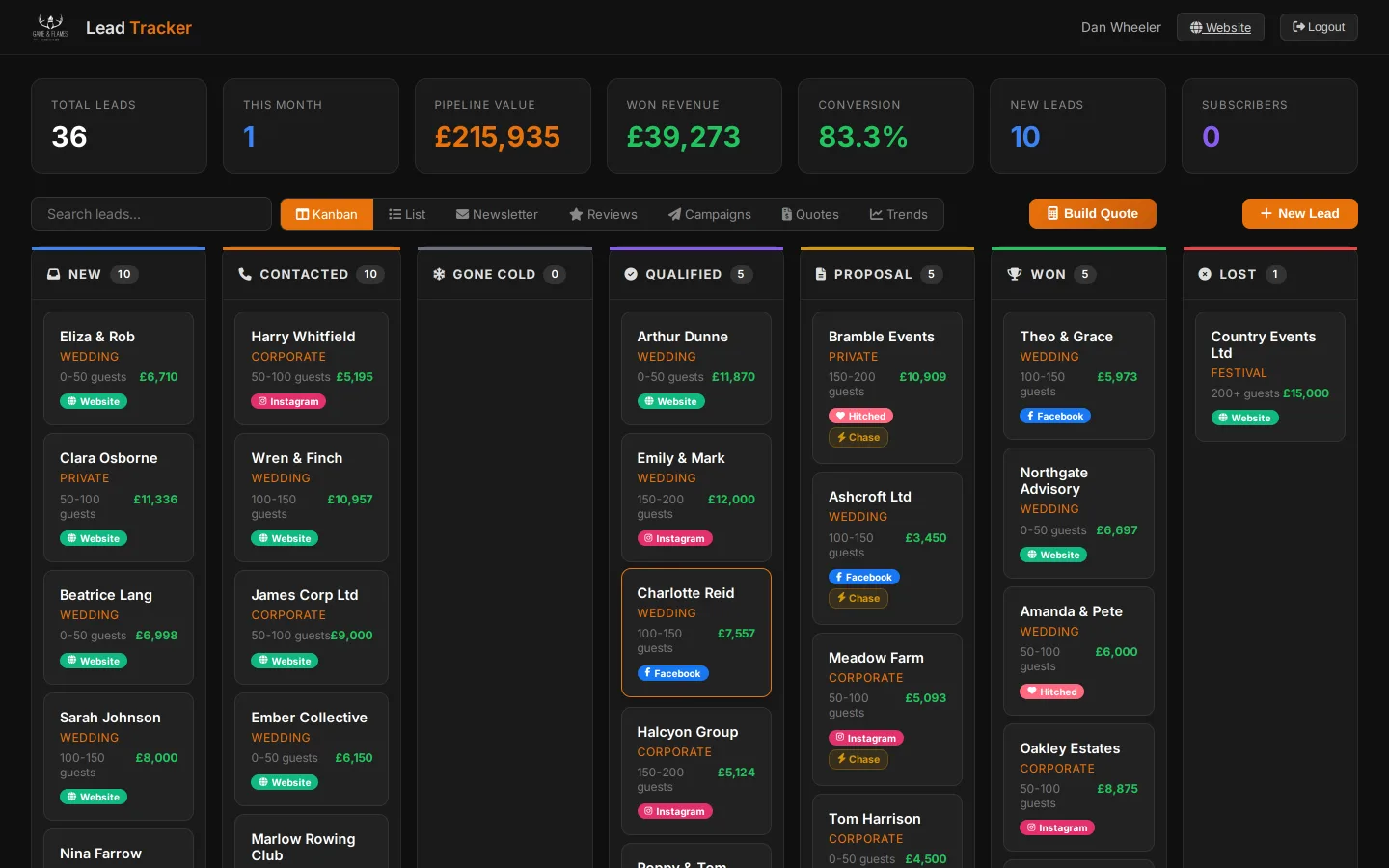
At Game & Flames, a live-fire caterer in Bexhill-on-Sea, the brief said leads arrived by email and got lost. What shipped was a CRM where every enquiry from the website lands in one place, with notes and an activity log on each, and where AI drafts the follow-up after a recorded call for a person to read and send. The same codebase runs the 15-page website, which finally shows the 69 five-star reviews the old site hid.
None of that needed a heat map. It needed a clear brief and a build.
This matters more the smaller you are. A corporate team can absorb a six-month plan that goes nowhere. A ten-person firm cannot: the money spent on the deck is the money that should have built the first system.
A specification is not a roadmap, by the way. A spec describes one thing you are about to build, in enough detail to build it. A roadmap describes everything you might build, eventually. You need the first. You can usually skip the second.
What to do instead
- Pick the one task costing you the most time or money right now. Not the most interesting one. The most expensive one.
- Build a working system for it in weeks, not months, with a person signing off anything it sends.
- Measure it: hours saved, leads answered, revenue traced back to where it came from.
- Use that win to choose the next one, and to pay for it.
That is the whole method. It fits on a postcard, which is roughly the point.
“But we need a strategy”
You do. It just should not be the thing you buy. Strategy is the thinking that picks the first build and the order of the ones after it. It belongs inside the build, where reality checks it every week.
That is how we sell it. For an owner-run business, strategy comes included in a build and is never sold on its own. For a corporate team, implementation strategy, infrastructure and adoption come as part of an engagement, alongside something being built and people being trained. Never as a standalone roadmap.
How to tell you are being sold a roadmap
- The first thing you receive is a document, not something that runs.
- The timeline is measured in quarters.
- Nobody can tell you what will be working in four weeks.
- You pay for a “scoping phase” now, and the build gets quoted later.
- No number is attached to anything: no hours, no leads, no pounds.
If two or more of those apply, ask for one working thing first. Anyone who can actually build should be able to name it on the first call.
What the first month looks like with us
It starts with the Free Business Review: a call of 20 to 30 minutes where we find the gaps, the leaks and the quick wins in how your business runs. Within one working day you get a plain-English summary by email: three things to fix, in order, with a rough value on each. No deck.
If one of them makes sense, we put a fixed price on it and build it in weeks, with a written update every week and a demo every fortnight. You own the code and the accounts from day one. Then we measure it, and the number decides what comes next.
Ship one useful thing in a fortnight, measure it, then decide what comes next. That is the whole plan.